Turn on more accessible mode Turn off more accessible mode Skip Ribbon Commands Skip to main content
Pesticide Environmental Stewardship
Promoting Proper Pesticide Use and Handling
Supported by CIPM

Center for Integrated Pest Management

Air Blast Sprayers

Skip Navigation Links
Home
Topics
Sponsors and Partners
Resources
Terms/Acronyms
Ask a Question
How to Read the Label
Record Keeping
Disposal
Drift
Surface and Groundwater
Wildlife and Pollinators
Storage
Handling Containers
Spills
Terms & Acronyms
Calibration
Homeowner
IPM
Resistance
Soil Fumigation
Transportation
The Worker Protection Standard
Personal Protective Equipment
Protecting Pollinators
Scroll up
Scroll down
Acronyms
Terminology
Agricultural Terminology Links
Scroll up
Scroll down
Skip Navigation Links
Home
How to Read the Label
Calibration
Disposal
Drift
Types of Drift
Evaluate the Site
Evaluate the Weather
Understanding Droplet Size
Managing Drift with Nozzles and Boom Height
Using Buffers to Reduce Drift
More Drift Reduction Methods
Air Blast Sprayers
Aerial Application
Resources
Drift Management Slide Presentation
Drift Flash Show
Drift Quiz
Handling Containers
Homeowner
IPM
Personal Protective Equipment
Pollinator Protection
Recordkeeping
Resistance
Soil Fumigation
Spills
Storage
Surface and Groundwater
Transportation
Wildlife Protection
Worker Protection Standard
Skip Navigation LinksPesticide Environmental Stewardship > Drift > Air Blast Sprayers
Air Blast (orchard) sprayers
Initial compilation courtesy of Jim Wilson, PhD. South Dakota State University
Page Content

Air Blast Sprayers

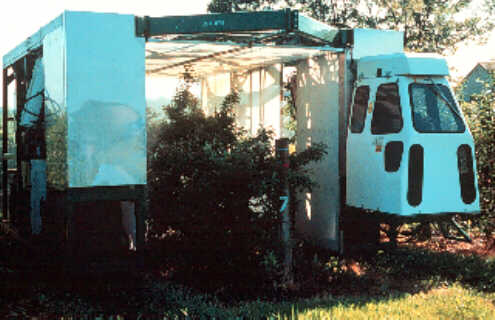
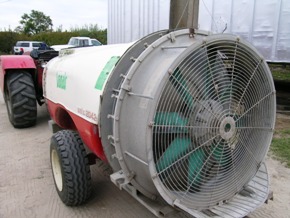
Air blast sprayers by their very nature move pesticide by creating wind to treat orchard and vineyard crops. This often places small droplets that are not intercepted by the canopy in a prime position to be carried off target. Drift can be managed by adjusting air deflectors and adding or removing nozzles to ensure the pesticide is directed into the canopy. Adjust nozzles and pressure to achieve the droplet size recommended on the label. Consider skipping the outer rows, particularly on the downwind side, to provide a buffer strip. Seriously consider planting windbreaks around the field edges to act as filters. Newer sprayer designs such as tower sprayers and tunnel sprayers can do an excellent job of keeping the spray in the canopy. Where feasible, consider using these types of sprayers. Observe where the spray is being directed and make every effort to keep it within the canopy.
​

Conventional Air Blast Sprayer

​

Tunnel Sprayer

​ ​

Tower Spray

y

South Dakota State University


  • Home
    Sign In