Pesticide drift occurs whenever pesticide leaves the intended target site through the air during or soon after application.
Pesticide drift may cause injury to farmworkers and other people, particularly children, adjacent crops or other non-target plants, livestock, sensitive areas, fish, and wildlife. Even if visible injury does not occur, illegal residues may be present in adjacent areas. Pesticide drift may also result in regulatory fines, legal liability, and litigation.
When pesticide drift occurs, some part of the pesticide is not reaching its intended target, and the potential benefit from the application is reduced. The likelihood of pesticide drift will be reduced if the applicator understands the relationships among pesticide products, application equipment, and site and weather conditions.
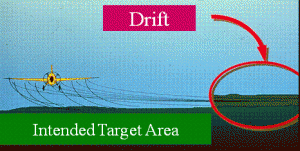
This IS drift… |
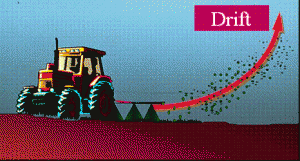 so IS this so IS this |
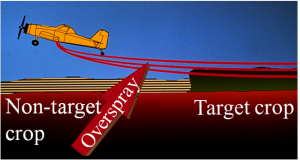
This is not drift… |
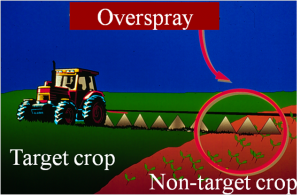
neither is this |
| Photos: Western Crop Protection Assoc., Sacramento, CA | |
Applicator Responsibility
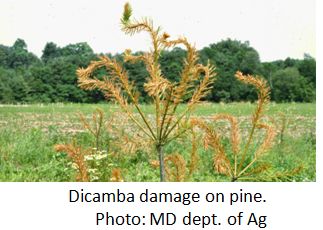 It is the applicator’s responsibility to consider all the factors that will impact the drift of a specific pesticide application. Determine if there are any sites near the application area that are particularly at risk from exposure to pesticides. These may include sensitive crops, organic fields, beehives, bodies of water, areas of shallow groundwater, schools, hospitals, and nursing homes. Read the pesticide label to determine if the product has any specific warnings or environmental hazards. Write down your plans to avoid pesticide drift into sensitive areas, and follow your plan during application. Keep a copy of the plan with application records.
A brief description of, and links to, the various topics within this module follows:
- Types of Drift — Differences between vapor and spray drift
- Evaluate the Site — Identify sensitive areas and potential problems
- Evaluate the Weather — Weather conditions and how they affect drift
- Understanding Droplet Size — The effect of droplet size, on drift potential
- Managing Drift with Nozzles and Boom Height — Nozzle size, maintenance and height; all influence drift potential
- More Drift Reduction Methods — Drift reduction technologies
- Air Blast Sprayers — Ways to reduce the drift potential of air blast sprayers
- Aerial Application — Additional drift potential encountered by aerial applicators
- Using Buffers to Reduce Pesticide Drift and Wind Erosion — This section describes buffers used to reduce drift and wind erosion potential.
- Spill Quiz Module
- Drift — PowerPoint presentation of issues related to drift and drift management
- Resources — Links to additional resources
Initial compilation courtesy of Jim Wilson, PhD