Pesticides available for purchase consist of one or more active ingredients and inert ingredients. The
active ingredient is the part that controls or repels the pest. The inert ingredients are used to dilute and/or aid the effectiveness of the active ingredient.

No one pesticide will kill all types of pests. For example, an insecticide that protects your apple trees against a certain insect usually will not control any disease of the tree. Pesticides that target certain groups of pests also differ in the spectrum of pests they control. For example, while herbicides do control weeds, no herbicide will control every weed species. Some herbicides control broadleaf plants such as dandelions, while others control grasses such as crabgrass. Some herbicides are non-selective; that is, they kill all (or almost) all pests they come in contact with. Pesticides can be timing specific. For example, some herbicides only prevent weed seed from emerging; others kill existing plants and have little impact on germinating seeds.
To select an appropriate pesticide, you need to know something about the pest you are trying to control. Knowing the identity, life cycle, and needs of the pest will help you select a pesticide that will effectively control it. The pesticide label provides most of the information necessary to answer questions on pesticide application and safe use (see Reading the Label ). Consult the label to be sure the target pest and application site are listed.
Always consider the following factors before purchasing a pesticide:
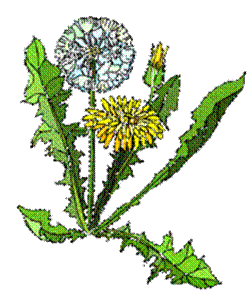 Is the pest that needs to be controlled listed on the label? Find the specific pest, or pest type (for example, “kills broadleaf weeds”), on the label.
- Is the life stage of the insect or weed within the effective range of the product? Some insecticides may target specific insect life stages (for example, grubs or the immature stage of a beetle), while herbicides may target specific plant growth stages.
- Is the timing correct for best disease control? Some fungicides must be applied before the disease is apparent (preventative), while others can control active disease (curative).
- Can the pesticide be used where you need it? Lawn products may not be labeled for gardens, just as dog products may not be used for cats. Never use products labeled “for outdoor use only,” inside a home or other structure. Never use pesticides around creeks, streams, lakes, or other bodies of water, without checking the label to make sure it is labeled for that use. Always review and follow any relevant precautions listed on the label to prevent contamination of water sources.
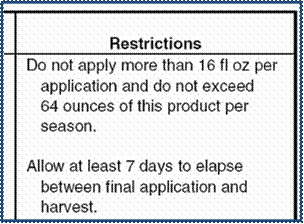 Can you apply the pesticide when and as needed? Pesticides for food crops often cannot be applied within a certain number of days before harvest, as specified by the label (see Restrictions on the label at left). Often indoor foggers require vacating the building for a specific amount of time. Again, read the label thoroughly.
- Do you have, or are you willing to purchase, the needed application equipment and personal protective equipment as listed on the label? Both are required for safe and proper use of the product. Although more costly by volume, ready-to-use products eliminate the measuring and mixing requirements of concentrated products. This may also eliminate the need for personal protective equipment or other mixing and application equipment.
- How large an area needs to be treated? Concentrated products are better for larger areas. Purchase only the amount you plan to use during the current season to minimize storage needs and loss of effectiveness over time.
- How long does the pesticide work? Some pesticides offer a short period of control while others provide long-term protection. Decide what is best for your situation.
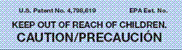 Which product poses the lowest health and environmental hazards? Signal words—Caution, Warning and Danger—indicate the relative toxicity of the pesticide to humans. Environmental hazards also are listed on the label. (Find out more about this in Reading the Label).
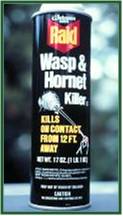 Which formulation is best for the pest and/or target area? Home-use pesticides come in many formulations – including:
- solutions- a mixture of liquids,
- aerosols,
- dusts- applied dry,
- granules,
- baits- liquid or solid depending on the pest to be controlled, and
- wettable powders- mixed with liquids before application.
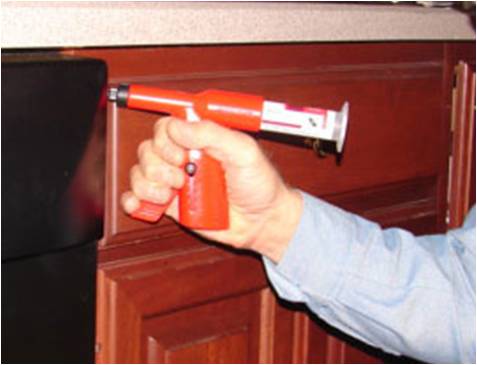
Certain formulations work better for some pests and/or some target areas than others. Be sure to know the advantages and disadvantages of each type of formulation before purchasing the pesticide.
Compiled by Wayne Buhler, PhD.