Follow these safety recommendations to transport pesticides properly:
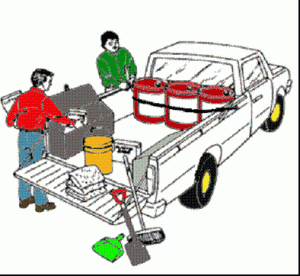 Never transport pesticides in the passenger area of a vehicle; instead, place them in the trunk or truck bed. If you must transport pesticides in a station wagon or van, secure them in the back away from passengers and pets and open the side windows.
- Do not bag pesticides with groceries or other household items, or carry them in the same area of a vehicle to avoid accidental contamination.
- Make certain pesticide container lids are securely fastened.
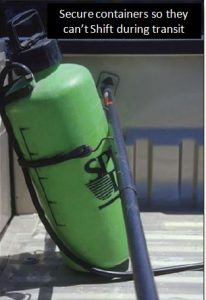 Secure containers in an upright position to ensure they cannot fall or be knocked over. Boxes and other packing materials may be useful. Wrap glass containers in paper to protect them from breaking. It is nearly impossible to thoroughly clean pesticides from upholstery, so take extra precautions to ensure spills do not occur in a vehicle
- Protect pesticides from extreme hot or cold temperatures. Temperature extremes can damage containers and cause chemicals to lose effectiveness.
- Never leave pesticides unattended in an unlocked trunk or open truck bed to prevent contact by children or others.
Compiled by Wayne Buhler, PhD.