Turn on more accessible mode Turn off more accessible mode Skip Ribbon Commands Skip to main content
Pesticide Environmental Stewardship
Promoting Proper Pesticide Use and Handling
Supported by CIPM

Center for Integrated Pest Management

Fungicide Resistance

Skip Navigation Links
Home
How to Read the Label
Calibration
Disposal
Drift
Handling Containers
Homeowner
IPM
Personal Protective Equipment
Pollinator Protection
Recordkeeping
Resistance
Understanding Resistance
Preventing Resistance
Herbicide Resistance
Herbicide Resistance Terms to Know
Is Resistance to Blame- Herbicide
Incidence and History of Herbicide Resistance
Mechanisms of Herbicide Resistance
Proactive Herbicide Resistance Management
How to Manage Herbicide Resistance
Spraying by the Numbers- Herbicide
Resources and Suggested Reading
Resistance Lessons
Insecticide Resistance
Is Resistance to Blame
Raised Resistance Risks
Insecticide Resistance Mechanisms
Take Steps to Avoid Insecticide Resistance
Spraying by the Numbers
What Can You Do About Resistant Insects
Resources and Suggested Reading
Fungicide Resistance
Fungicide Terms to Know
Is Resistance to Blame?
Mechanisms of Fungicide Resistance
Raised Resistance Risks
Proactive Fungicide Resistance Avoidance
Spraying by the Numbers
How to Manage Fungicide Resistance
Resistance Quiz
Soil Fumigation
Spills
Storage
Surface and Groundwater
Transportation
Wildlife Protection
Worker Protection Standard
Skip Navigation LinksPesticide Environmental Stewardship > Resistance > Fungicide Resistance
Fungicide Resistance
Compiled by Wayne Buhler
Page Content

Fungicide Resistance

Fungicides are important tools for preventing and managing plant disease. Unlike insecticides and some herbicides which kill established insects or weeds, fungicides are most commonly applied to protect healthy plants before infection occurs. Resistance to fungicides is one of many possible causes of poor disease control (see “ Is Resistance to Blame? ”). Resistance refers to a situation where a given fungicide once controlled a particular fungal population but, after one or more applications, that fungicide no longer controls that population. To understand the process of selection that leads to fungicide resistance see “ Understanding Resistance ”. This module describes how fungicides work, the factors that contribute to fungicide resistance, and how resistance can be delayed or managed.
 
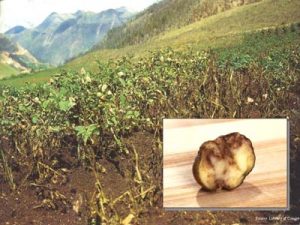
Potato blight has shown resistance to Phenylamides
 
Photo: potatomuseum.com
​

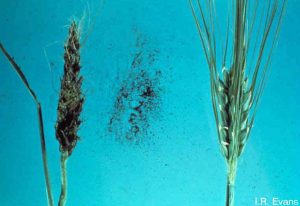
​barley_lsmut14_l.jpgCarboxanilide resistant
Barley loose smut
Photo: I. R. Evans

This module was expertly reviewed by:
Dr. Turner Sutton, Professor Emeritus, Department of Plant Pathology, NC State University, and,
Dr. Allison Talley, Syngenta Crop Protection


A brief description of, and links to, the various topics within this module follows

  • Fungicide Terms to Know
    Understand the terms that describe fungicide activity and resistance development
  • How to Manage Fungicide Resistance
    If fungicide resistance is confirmed or highly suspected, diverse approaches to managing resistance need to be incorporated
  • Is Resistance to Blame?
    Most fungicide failures are not likely due to resistance.
  • Mechanisms of Fungicide Resistance
    There are several ways that populations of fungi become resistant.
  • Proactive Fungicide Resistance Avoidance
    Use diverse disease control tactics to help avoid resistance.
  • Raised Resistance Risks
    The fungicide mode of action can determine the likelihood and speed of resistance development
  • Spraying by the Numbers
    Fungicides with similar modes of action could exhibit cross resistance. One way to avoid this is by rotating chemically dissimilar fungicides.
  • Home
    Sign In