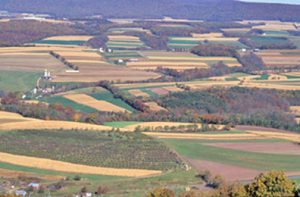
 Runoff is the movement of water and any contaminants across the soil surface. It occurs when irrigation, rain, or snow melt adds water to a surface faster than it can enter the soil. Water running off the land towards canals, streams, rivers, and lakes can also move chemicals, such as pesticides and fertilizers. Pesticides may be moving with the runoff water if dissolved in the water or adsorbed to eroding soil particles. The movement of a pesticide from the application site depends on a complex interaction of pesticide and soil properties with weather conditions and site characteristics.
Soil Characteristics that Affect Runoff
Soil moisture content: Soil moisture content is a significant factor in determining how much runoff will occur from a site. Moist soils are more prone to runoff losses than drier soils.
Soil texture: Soils that contain clay and are compacted are much more prone to runoff losses than sandy soils. Dry sandy soils that are not compacted are unlikely to experience pesticide runoff from the site during heavy rainfall.
Site Characteristics that Affect Runoff
Weather or irrigation: Pesticide runoff will be greatest when heavy rain follows soon after a pesticide application. Over-irrigation could also lead to an accumulation of excess surface water and result in runoff. Runoff can also happen if a pesticide is applied to saturated soil, followed by light rain or additional irrigation. Frozen soils enhance the opportunity for pesticide runoff and can approach 100 percent; therefore, pesticides should never be applied to frozen soils.
Slope: The slope or grade of the site contributes to runoff. The steeper the ground slope, the more likely water is to run off the site. On side-hill and sloped ground contour planting, strip cropping, and buffer strips will reduce runoff.
Vegetation: The amount and type of vegetation on a site will affect runoff. Conservation tillage or reduced-tillage cropping systems leave ample vegetation or crop residue that slows the movement of runoff water and keeps the pesticide on site. Dense grass cover extensively reduces the potential for runoff losses of pesticides from lawns and buffer zones.
Pesticide Characteristics that Affect Runoff
The physical and chemical properties of a pesticide are good indicators of potential runoff losses. The only way to know if the product you are using is vulnerable to runoff or leaching is to read the Environmental Hazards section on the pesticide label. Manufacturers must assess the properties of their products related to solubility, adsorption, and persistence, and state the appropriate precautions on the label.
Solubility: Highly soluble pesticides are more likely to be “picked up” by running water and washed off the treated site. Most pesticides have low water solubility and do not dissolve enough to contaminate runoff water in the dissolved state significantly.
Adsorbency: Pesticides that strongly adsorb to soil particles will stay on the treated site as long as the soil remains. However, pesticides could be moved on soil particles if the soil is eroded by wind or heavy rain.
Pesticide persistence: The persistence of a pesticide plays a role in pesticide runoff; the faster it degrades, the less it is available to move with runoff water.
Pesticide formulation: Research has shown that granular pesticide formulations are found in runoff water more than any other formulation.
Pesticide application method: Pesticides that are incorporated or injected stay on-site and are not moved by heavy rainfall via runoff.
Original content compiled by: