There are a variety of common management practices that provide multiple benefits.
Crop and Soil Management Strategies
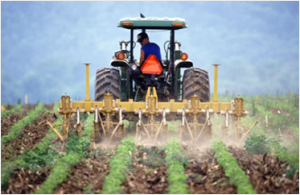 Crop rotation keeps pests off-balance, especially those that prefer a particular crop with its associated cultural practices.
- Cover crops provide crop residues, which enhance soil organic matter.
- Careful crop variety selection ensures that the crop is well-adapted to local conditions and grower needs
and often provides valuable disease or insect resistance or tolerance to pesticides that will be used to control pests. - Proper seedbed preparation and planting allows the crop to emerge quickly, potentially reducing early-season disease and insect damage, and weed competition.
- Proper drainage and irrigation management promote optimum plant growth, inhibit various root diseases, and reduces runoff.
- Proper equipment use avoids soil compaction, which can slow crop growth and promote runoff.
Conservation Buffers
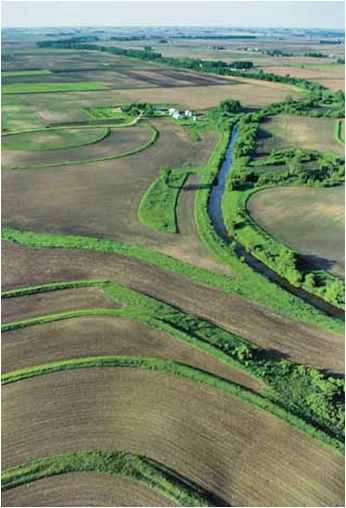 Conservation buffers are areas designed to intercept and trap chemicals before they reach surface water. Often, native grasses are planted alone or in combination with shrubs and trees along field borders between the crop and a waterway. Buffers trap pesticides, bacteria, fertilizers, and soil sediment, reducing the number of potential contaminants that move off the site. Buffers are one of the best management tools a landowner can install, as they offer multiple benefits and often require little maintenance.
For more information on conservation buffers, visit the Conservation Practice Standards homepage from the Natural Resources Conservation Service, USDA.
Integrated Pest Management (IPM)
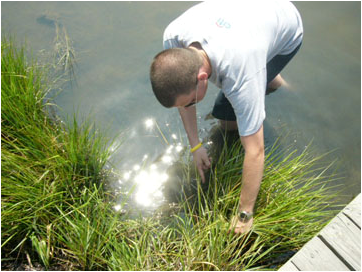 An IPM program combines the best techniques to prevent pests, keep them below economically damaging threshold levels, and ensure that pesticides are used appropriately. If a pesticide is prone to reach surface or groundwater, suitable IPM tactics can reduce or eliminate the risk of surface or groundwater contamination.
The IPM program also facilitates the selection of a pesticide to be delivered precisely on target and at the proper time. Crop scouting, or monitoring, correctly identifies the pest and collects information needed so that applications are made only when needed and only when the pest is vulnerable, allowing for a more effective pesticide application. Reducing the need for multiple applications of pesticides reduces the chance that pesticides may reach and contaminate water. Visit the PES site Integrated Pest Management.
Best Management Practices (BMPs) are conservation practices, or systems of practices, and management measures that control soil loss and reduce water quality degradation caused by nutrients, animal wastes, toxins, and sediment. BMPs can improve the environment while also improving the farmer’s bottom line.
Selecting Appropriate Pesticides
Protecting water from contamination requires planning and records. Past pest scouting or monitoring records, along with past pesticide application records, help you select the best controls. Selecting the proper pesticide for the crop, the pest, and the site is important. When a site has groundwater near the surface, and the soil is permeable, then the leaching potential of the pesticide must be considered during pesticide selection.
Applicators should read the label to find warnings that tell them that the pesticide may leach. Here is an example of language to look for in the Environmental Hazards section of the label: “This product has properties and characteristics associated with chemicals detected in groundwater. The use of this chemical in areas where soils are permeable, particularly where the water table is shallow, may result in groundwater contamination.” There may also be a “Groundwater Advisory” statement on the label. Many new labels have this statement, which is a critical aid in selecting the right pesticide for the job.
Proper Pesticide Mixing and Loading Procedures
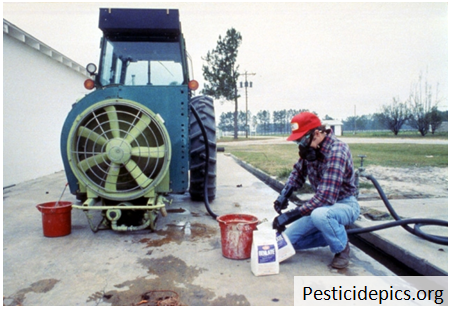 More pesticide spills occur while the pesticide is being measured and mixed than during any other part of a pesticide application. Therefore, locate the mixing/loading site away from wells, streams, and lakes. Maintain a distance of at least 100 feet (check the pesticide label for more specifics) between the mixing and loading site and wellheads, ditches, streams, or other water sources.
Measure, mix and load over an impervious surface, such as a concrete pad, which prevents spills from soaking into the ground. Measure the product carefully to avoid spills. Using a closed transfer system to mix and load pesticides also helps reduce the risk of spills. If you are not using a pad, move the mixing and loading steps from place to place to avoid chemical buildup from accidental splashes or spills (see Pesticide Spills).
Be prepared for spills and have a “spill kit” readily available near the mixing loading area. Never leave a tank while it is being filled, and pay constant attention during filling to prevent overfilling and spilling of the pesticide on the ground. Be disciplined and patient.
Applicators should read the label carefully to find warnings regarding mixing/loading pesticides. Here is a statement found in the Environmental Hazards section of many labels: “Most cases of groundwater contamination involving this pesticide have been associated with mixing/loading and disposal sites. Caution should be exercised when handling this product at such sites to prevent contamination of groundwater supplies. The use of closed systems for mixing or transferring this pesticide will reduce the probability of spills. Placement of the mixing/loading equipment on an impervious pad to contain spills will help prevent groundwater contamination.”
Prevent Pesticide Backflow
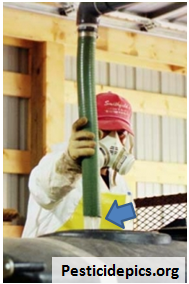 Backflow occurs when a water supply loses pressure and starts flowing backward toward the water source. The backward flow creates a siphon that draws some of the contents of the sprayer tank back toward the water source if a pipe or hose is below the water surface in the tank. If backflow occurs, the water supply pipes, pumps, and well become contaminated by pesticides from the tank. An anti-siphon device (check valve) prevents backflow and the resulting contamination from occurring. Proper anti-siphoning techniques include the use of a reduced pressure zone (anti-siphon) device or an air gap between the filler pipe and the tank.
Proper Application Procedures
Proper application of pesticides starts with calibration. Calibrating application equipment is the only way to be sure that the proper amount of pesticide is applied. The application of excess pesticide increases the risk of contaminating water by overloading the protective mechanisms of degradation and adsorption, making them ineffective. Over application is not only risky for the environment but is a violation of label directions and the law (see Calibration).
Knowledge of the application site is very important for preventing water contamination. You should know where wells are located, the depth to groundwater, and where surface water is located before making an application. After identifying these features, make plans to protect them. Decide in advance where to turn the application equipment on and off. Using buffer zones and setback areas creates safety zones by keeping applications away from sensitive areas, particularly surface waters. Pesticide applications should hit the target precisely. Applications that move off-target can contribute to water contamination.
Preventing drift is another important task of the applicator. Drifting pesticides can contaminate water and cause other problems. Monitoring the weather conditions, setting the boom height as close as possible to the target, and selecting the proper nozzle type are important activities that help reduce the chance of pesticide drift contaminating surface waters.
Irrigation Management
Irrigation increases the chance that pesticides will
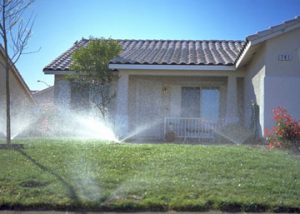
migrate to groundwater and surface water. Irrigating saturated soils or irrigating at a rate that exceeds the infiltration rate of soil promotes runoff that can carry pesticides with it. Irrigation that promotes the frequent downward movement of water beyond the root zone of plants also promotes the leaching of substances, including pesticides, to groundwater. This is of particular concern in areas where frequent irrigation is necessary because of coarse-textured soils. Proper irrigation management is critical to minimize the risk of pesticides moving to groundwater.
Proper Pesticide Storage
 Proper storage of pesticides is also important to prevent water contamination. Locking pesticides inside a fire-resistant, spill-proof facility is an excellent way to prevent accidental pesticide spills. Proper storage is very cheap compared with the expensive consequences of accidents, spills, or fires. Be prepared for spills, and have a “spill kit” readily available inside or near the storage area (see Pesticide Storage).
Proper Disposal of Pesticides and Containers
Pesticide containers that have not been triple rinsed pose a risk to water resources. Contaminated containers left outside, and exposed to rain, can leak pesticides into the environment. Triple rinsing, prior to disposal, removes pesticide residues. Water collected from cleaning and rinsing application equipment should be applied to the original site of the application. Be careful not to exceed label rates. Re-using this pesticide-containing water is an environmentally responsible way to dispose of this material. Collect rinsed containers in a dry, secure, and protected area for disposal. Dispose of the rinsed containers following label directions and local ordinances. Use pesticide container recycling programs where available (see Pesticide Disposal).
Original content compiled by: